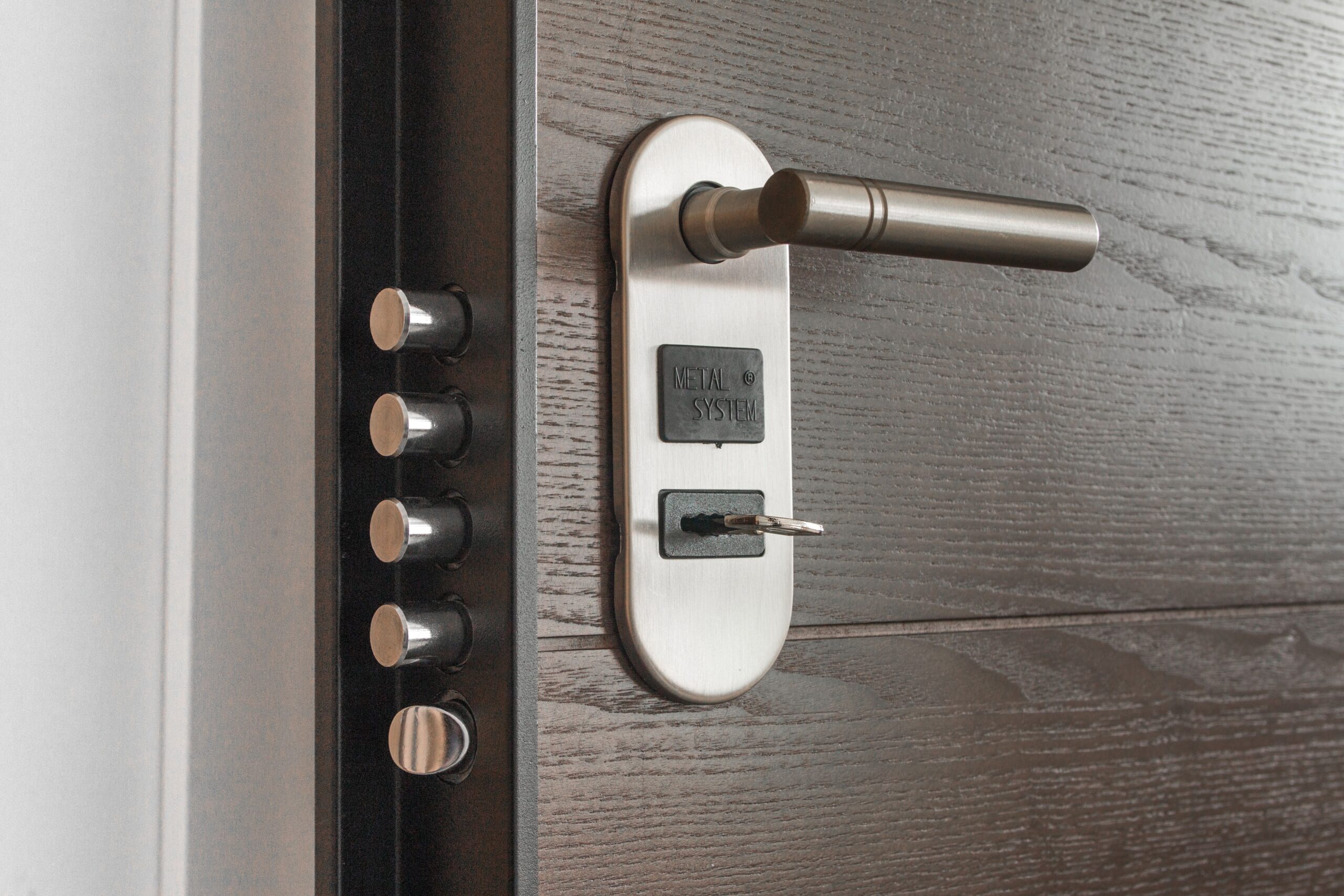
Most burglars don’t pick locks or break windows. They look for the easiest way in, and very often that is the front door. The good news is that you don’t need an expensive alarm system to make your door much harder to get through. A few simple upgrades, most of them under $30, can turn a weak door into one that sends a burglar looking for an easier target.
Here is what actually makes a difference, starting with the cheapest fixes.
Why front doors fail
When a front door gets forced open, the lock itself rarely breaks. What usually gives way is the wood around it. A strong kick near the lock puts all the force on the door frame, and the thin strip of wood that holds the strike plate splits. The door swings open with the deadbolt still extended.
That means the goal is not just a better lock. The goal is to make the whole door, frame and hinges work together so the force of a kick has nowhere to go.
1. Replace the short screws in the strike plate
The strike plate is the metal plate on the door frame where the deadbolt slides in. In many homes it is held in place by screws that are only about half an inch to three-quarters of an inch long. Those screws only reach the thin trim of the frame.
Take them out and replace them with 3-inch screws. Longer screws go through the frame and into the solid wood stud behind it. This one change costs a few dollars and takes about ten minutes, and it is one of the most effective things you can do.
If you want to go a step further, buy a heavy-duty strike plate (sometimes called a reinforced or high-security strike plate). These are longer and have more screw holes, which spreads the force across more of the frame.
2. Do the same with the hinges
The hinge side of the door is just as important. If the hinges are held by short screws, a hard kick can tear them out of the frame. Replace at least one screw in each hinge with a 3-inch screw that reaches the stud.
If your door opens outward and the hinge pins are visible from outside, consider security hinges or hinge pins that cannot be removed while the door is closed.
3. Use a real deadbolt, and use it every time
A spring latch, the kind that locks when you push the button on the doorknob, is easy to slip with a thin card. It is not real protection. Every exterior door should have a deadbolt with a bolt that extends at least one inch into the frame.
When you shop for one, look for a grade rating from ANSI/BHMA. Grade 1 is the strongest, Grade 2 is solid for most homes, and Grade 3 is the most basic.
And the simplest rule of all: lock it. Many break-ins happen through doors that were simply left unlocked, even when people are home.
4. Reinforce the door frame
If you want the strongest protection, install a door frame reinforcement kit. These are long metal plates that cover the lock side of the frame, and sometimes the hinge side too. They spread the force of a kick along the whole length of the frame instead of one small spot.
Most kits cost between $40 and $100 and can be installed with basic tools in an afternoon. If you rent, ask your landlord before installing one.
5. Check the door itself
A hollow-core door, the kind often used for inside rooms, can be broken through with a few hard kicks. Exterior doors should be solid wood, metal-clad or fiberglass. Knock on yours. If it sounds hollow and light, it may be worth replacing.
If your door has glass panels near the lock, a burglar may break the glass and reach in to turn the deadbolt. Options include security film on the glass, or a double-cylinder deadbolt that needs a key on both sides. Be careful with that second option: it can make it harder to get out in a fire, and some local fire codes do not allow it. Check your local rules first.
6. Make the area around the door visible
Burglars prefer to work where no one can see them. Some simple ways to take that away:
- Keep bushes and plants near the door trimmed low.
- Install a bright porch light, or a motion-sensor light.
- Keep the area clear of objects someone could hide behind.
A video doorbell or a small camera aimed at the entry can also help. Even a visible camera tends to make someone think twice.
7. Small habits that matter
The hardware is only part of the protection. A few everyday habits close the gaps:
- Don’t hide a spare key under the mat, in a flower pot or above the door frame. Those are the first places a burglar checks. Leave a spare with a trusted neighbor instead.
- Don’t open the door for someone you don’t know. Talk through the door or use a doorbell camera.
- When you move into a new home, have the locks rekeyed. You never know who still has a copy of the old keys.
- Don’t leave packages sitting at the door for hours. They show that no one is home.
A simple weekend plan
If you want to do this step by step, here is an easy order:
- Day one: replace the strike plate and hinge screws with 3-inch screws.
- Day two: check your deadbolt and replace it if it is weak or loose.
- Later: add a frame reinforcement kit and better lighting.
None of these steps make a home impossible to break into, and no single product does. But each one makes your door slower and noisier to get through, and that is often enough to make a burglar move on.
If you are planning to be away for a while, read our guide on protecting your home while you travel for the holidays.
Leave a Reply