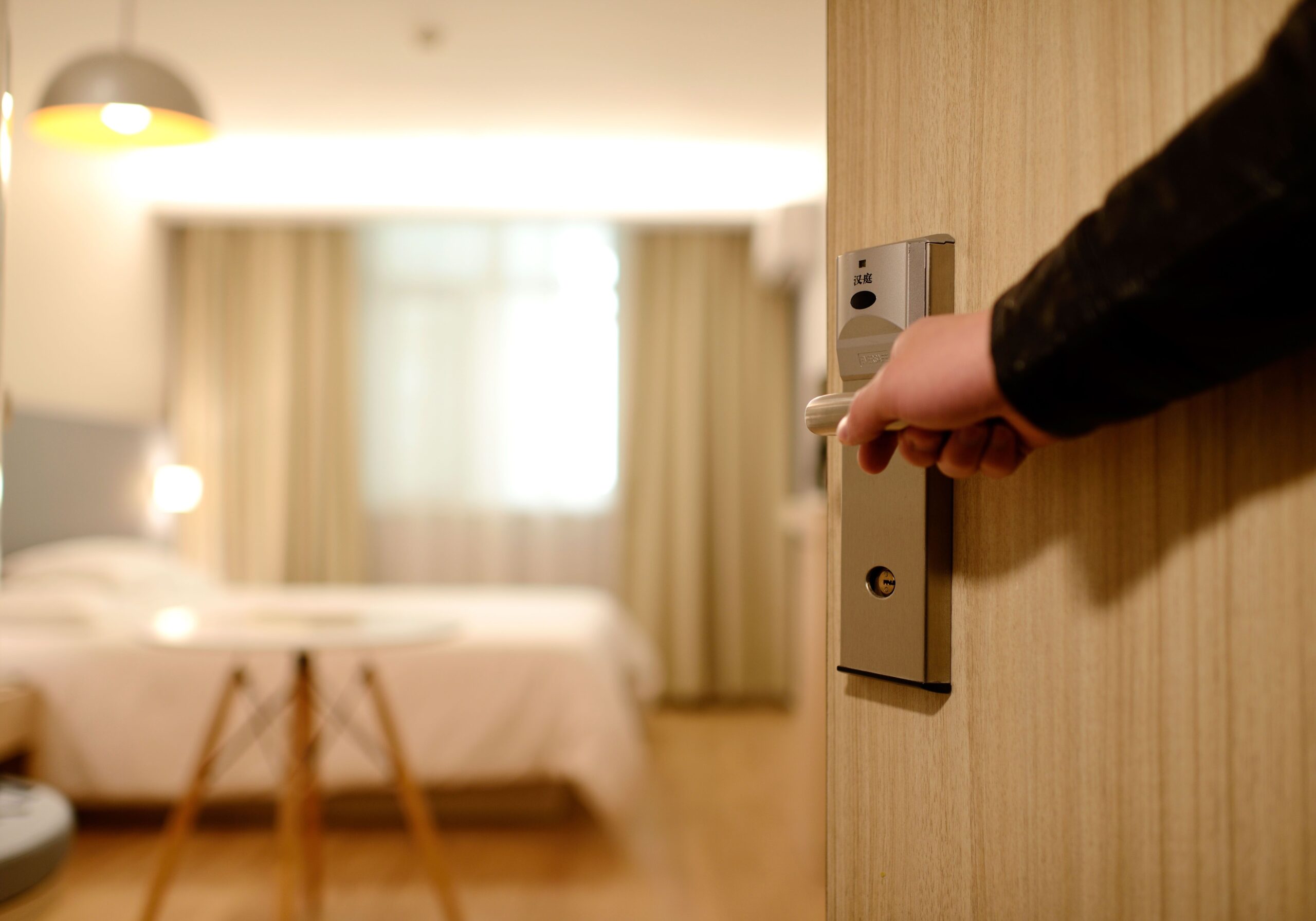
A hotel room feels private, but it is not your home. Many people have keys to it, the door opens onto a public hallway, and strangers come and go all day. Most hotel stays are perfectly safe, and a few simple habits make yours even safer. Here is what to do from the moment you check in until the moment you leave.
At check-in
Your room number is private information. If the front desk clerk says it out loud, quietly ask for a different room and have them write the number down instead. Anyone standing nearby could hear it.
When you can, ask for a room between the third and sixth floors. Rooms on the ground floor are easier to reach from outside, and very high floors can be harder for fire ladders to reach.
Take one of the hotel’s business cards with the address on it. If you get lost or need to give the address to a taxi driver, you will have it with you.
Check the room before you unpack
Before you settle in, take one minute to look around:
- Make sure the door closes and locks properly, including the deadbolt and the security latch.
- Check that windows and any balcony or connecting doors are locked.
- Look in the closet, the bathroom and behind the curtains.
- Find the nearest fire exit, and count the doors between your room and the exit. In smoke, you may not be able to see the signs.
If anything does not lock or feels wrong, call the front desk and ask for another room. That is a normal request.
Use every lock on the door
The main lock is not enough on its own. When you are inside, always use the deadbolt and the swing bar or chain as well. These stop someone with a key card from opening the door while you are in the room.
Some travelers also bring a portable door lock or a rubber door wedge. They are small, cheap and easy to pack, and they add another layer of protection. Just remember to remove them before you leave, and check the hotel’s rules first.
Keep strangers out
Hotel staff will rarely come to your door without being asked. If someone knocks and says they are from maintenance or housekeeping, and you did not call for them, do not open the door. Call the front desk using the room phone and ask if they really sent someone.
Be careful with calls to your room too. A common scam is a call late at night from someone pretending to be the front desk, saying there is a problem with your credit card and asking you to read the number over the phone. Real hotel staff will not do this. Hang up and walk down to the front desk in person if you are worried.
The same goes for flyers slipped under the door with food delivery menus. Some are fake and are used to collect card numbers. Order through an app or a restaurant you can confirm on your own.
Protect your valuables
Use the room safe for your passport, extra cash, cards and small electronics. If there is no safe, or it seems loose or broken, ask if the front desk can store your valuables.
Do not leave expensive items in plain view, even for a short time. A laptop on the desk is easy to grab when the room is being cleaned or if the door is not fully closed.
Hang the “Do Not Disturb” sign when you leave for the day, and leave the TV or a light on. It makes the room look occupied.
Be careful with Wi-Fi
Hotel Wi-Fi is shared with many guests, and some networks are not secure. Avoid logging in to your bank or entering card details on hotel Wi-Fi. If you must, use your phone’s mobile data or a trusted VPN. Also check that you are joining the hotel’s real network, not a fake one with a similar name.
When you leave the room
Before you walk out, make sure the door clicks shut behind you. Heavy hotel doors sometimes stop just short of closing.
At night, use the main entrance, which is usually better lit and watched. If you feel someone is following you to your room, walk past your door and go back to the lobby.
Before you check out
Do a last sweep of the room: the safe, the drawers, the bathroom, the charger in the wall. Then destroy or keep your key card. Many cards only hold your room number and dates, but it is still a good habit not to leave them behind.
A simple checklist
- Keep your room number private.
- Check locks, windows and the fire exit when you arrive.
- Use the deadbolt and latch every time you are inside.
- Do not open the door for unexpected visitors.
- Never give card numbers over the room phone.
- Use the safe and keep valuables out of sight.
A safe trip starts at home, too. Before you leave, read our guide on protecting your home while you travel for the holidays.
Leave a Reply